Written by Samuel Russell, Senior Youth & Family Counsellor, in collaboration with the Recovery Roadmap Working Group
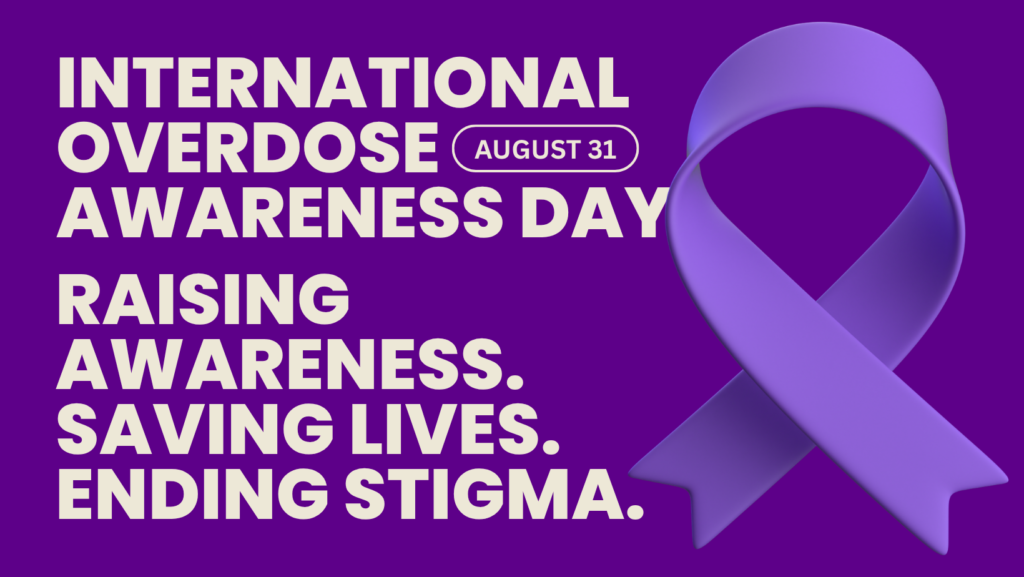
Every year on August 31, communities around the world come together for International Overdose Awareness Day (IOAD). Sally J. Finn, a family therapist and Salvation Army worker, recognized the need for a day dedicated to remembering those who have been lost due to drug toxicity. It is a day to remember the lives lost, support those who have been affected, and raise awareness about one of the most urgent public health issues of our time.
This year carries particular significance as we mark the 25th anniversary of IOAD
This day provides an opportunity to have difficult but necessary conversations: about drug toxicity, substance use, stigma, and the people behind the statistics.
Every Number Represents a Person
When we talk about drug toxicity deaths, it can be easy to become overwhelmed by numbers. Behind every statistic, however, is a person.
A child. A parent. A sibling. A friend. A colleague. A neighbour.
Each person who dies from drug toxicity leaves behind grief, memories, and loved ones trying to make sense of an unimaginable loss.
IOAD reminds us that these lives deserve to be remembered with dignity and compassion. It also reminds us that people who use substances are more than their use; they have families, goals, talents, relationships, and stories.
Challenging Stigma Through Compassion
One of the most important things we can do is challenge the stigma surrounding substance use and drug toxicity.
Stigma can prevent people from asking for help. It can make families feel isolated, it can discourage honest conversations about substance use, it can contribute to people using substances alone, or it can lead people to avoid accessing healthcare and support services when they need them most.
Substance use disorders are complex. It is not simply a matter of willpower or making bad choices. Treating people with compassion does not mean ignoring the risks associated with substance use: it means recognizing their humanity while helping create opportunities for safety, support, and recovery.
Prevention Takes All of Us
Drug toxicity prevention is not about one single solution. It involves education, connection, access to treatment, and recovery supports, harm reduction, and knowing how to respond when a drug toxicity event occurs.
Knowing the signs of opioid toxicity and understanding how to respond can make the difference between life and death. Having naloxone available and knowing how to use it is one practical way individuals and communities can be prepared to respond.
Just as importantly, we need to create environments where people feel comfortable asking for help before a crisis occurs.
A conversation can be an intervention. A connection can be a lifeline, and a second chance can change a life.
Seeing the Whole Person
This moves the focus away from trying to stop substance use as the only goal to better understand the whole person: their strengths, their needs, and the conditions that support a meaningful life.
A recovery-oriented approach begins with recognizing who the person is, building on their experience, and supporting what they need to move toward safety, connection, and hope.
When young people feel heard, they are more likely to build trusting relationships and engage with the support available to them.
Wood’s Home’s approach encourages individuals to recognize their strengths, develop goals, build self-esteem, and envision a future of self-actualization.
Ultimately, keeping people connected, supported, and hopeful creates opportunities for recovery. IOAD reminds us to remember those we have lost, while recovery-oriented practice reminds us to continue believing in the possibilities for those who are still here.
IOAD is both a day of grief, and a day of hope.
For every person we have lost, there are countless people who are still here. People who are working toward recovery, rebuilding relationships, reconnecting with their families, and discovering new possibilities for their lives.
Recovery does not happen in a straight line. It can involve setbacks, difficult days, and repeated attempts. But every opportunity to reconnect with support is an opportunity for something different.
We should never let someone’s past convince us that their future has already been decided.
25 Years of Awareness — What Comes Next?
25 years of IOAD represents 25 years of people coming together to remember, educate, advocate, and create change.
But the work is far from finished.
We can continue to learn. We can continue to challenge stigma. We can continue to talk openly about substance use. We can support families who are grieving. We can make sure people know where to find help. And we can continue building communities where asking for help is met with compassion.
On this 25th anniversary, we remember those we have lost.
We stand beside those who are grieving.
We recognize those who continue to struggle.
We celebrate those in recovery.
And we remind ourselves that behind every statistic is a human being whose life matters.
Remember. Educate. Act.
Because drug toxicity awareness is not only about remembering how many lives have been lost: it is about recognizing how many lives may still be saved.
On Monday, August 31, we are hosting a chalk memorial (weather permitting) outside at Inglewood Campus to recognize International Overdose Awareness Day. At 1:30pm Leslie will lead ceremony with a smudge where ribbons will be tied to the railing to honor those we have lost. We invite everyone to participate if you are able. Also, as purple is the colour of IOAD, we encourage you to wear purple clothes in solidarity. Please invite your clients or staff from other programs/campuses that you believe would benefit from participating.